Wilgens Sirise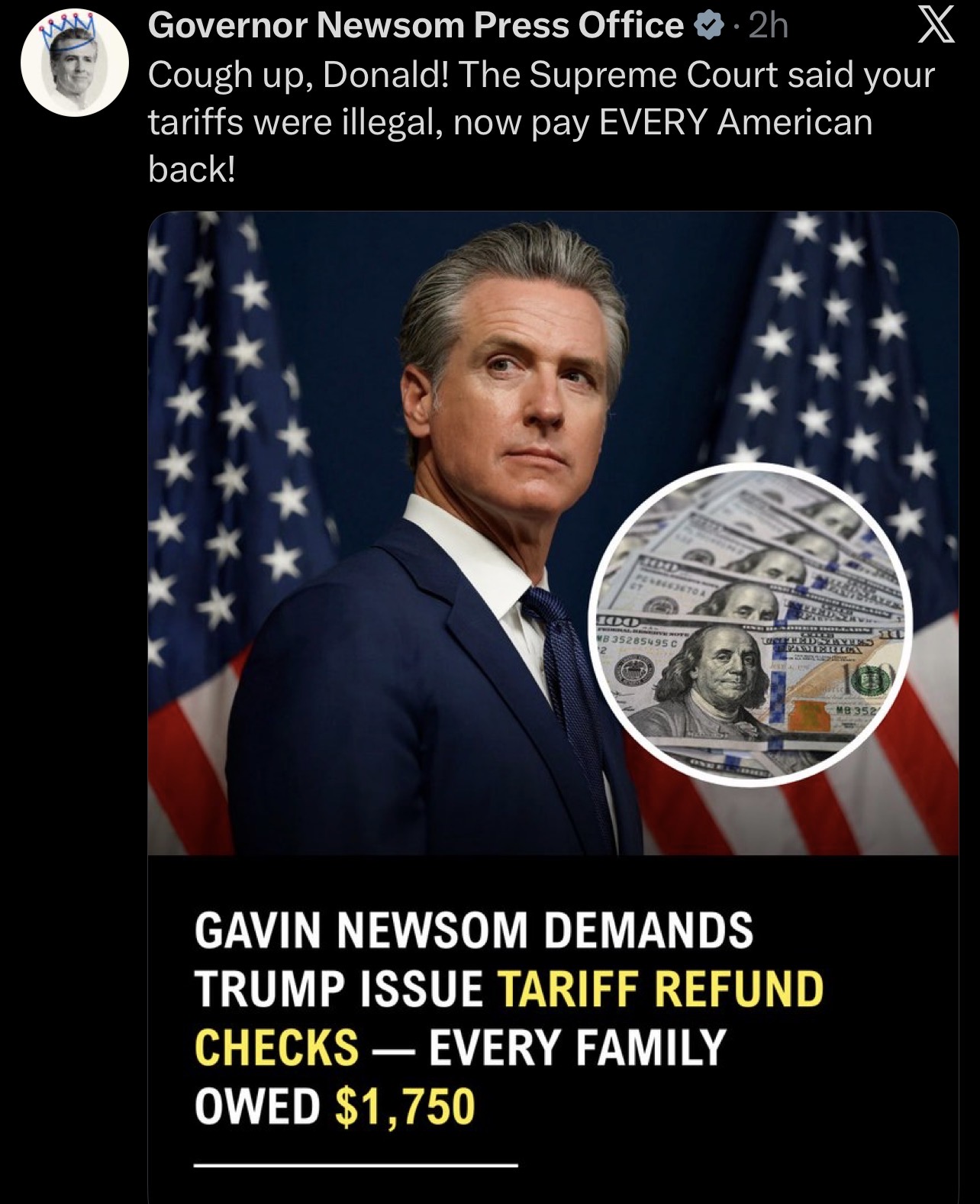
Supreme Court Tariff A major political and economic debate is gaining momentum across the United States after a controversial claim involving tariffs, the Supreme Court, and potential refund payments to American families. The discussion intensified after California Governor Gavin Newsom publicly suggested that Americans could be owed financial compensation following a court decision related to tariffs imposed during the Trump administration.
The statement, shared by the Governor’s press office, quickly went viral on social media. According to the post, the Supreme Court ruled that certain tariffs were illegal, and Newsom argued that Americans should be reimbursed for the higher costs those tariffs allegedly created. The claim suggested that families could be owed as much as $1,750 in what some are calling potential “tariff refund checks.”
Why Tariffs Matter to Americans
Tariffs are taxes placed on imported goods. While they are often used to protect domestic industries or pressure foreign governments, the cost of tariffs is usually passed down to consumers through higher prices on everyday products.
During the Trump administration, tariffs were imposed on hundreds of billions of dollars’ worth of goods, particularly from China. Economists have long debated the impact, but many studies concluded that American businesses and consumers bore much of the financial burden.
If a court determines that certain tariffs were improperly implemented or unlawful, it raises a critical question: Who should bear the financial consequences? That is the argument fueling Newsom’s call for refunds.
The $1,750 Refund Claim
The figure of $1,750 represents an estimate of how much the average American household may have indirectly paid due to increased costs linked to tariffs. However, it’s important to note that this number is based on economic estimates rather than a confirmed government payment plan.
At this time, there is no official federal program approved to send tariff refund checks to Americans. The proposal remains a political demand rather than a policy that has been enacted.

Still, the idea has captured national attention, especially at a time when inflation and the cost of living remain major concerns for millions of families.
Political and Economic Reactions
Supporters of the idea argue that if government policies increased consumer costs unlawfully, Americans deserve compensation. They see the proposal as similar to past stimulus payments that helped families during economic hardship.
Supreme Court Tariff Ruling Sparks Debate as Newsom Calls for $1,750 Refund Checks for American Families
Critics, however, say the proposal is politically motivated and unrealistic. They point out that calculating individual losses from tariffs would be complex and that issuing direct payments would require congressional approval and significant federal funding.
Economists also warn that large-scale refund programs could have budget implications and might increase federal spending at a time of already high national debt.
Why This Story Is Going Viral
The possibility of Americans receiving a $1,750 check has fueled widespread online interest. Financial relief stories tend to spread quickly, especially when households are still feeling the effects of rising prices.
However, experts urge caution. Many viral posts simplify or exaggerate the situation. While the legal debate over tariffs is real, the refund proposal is still in the discussion stage and not a confirmed benefit.
What Happens Next?
The future of any tariff-related refunds depends on several factors, including court interpretations, congressional action, and federal policy decisions. For now, the idea remains a political proposal rather than a guaranteed payment.
As the debate continues, one thing is clear: economic policies that affect everyday prices remain a powerful issue for American families—and stories involving potential financial relief will continue to capture national attention.